
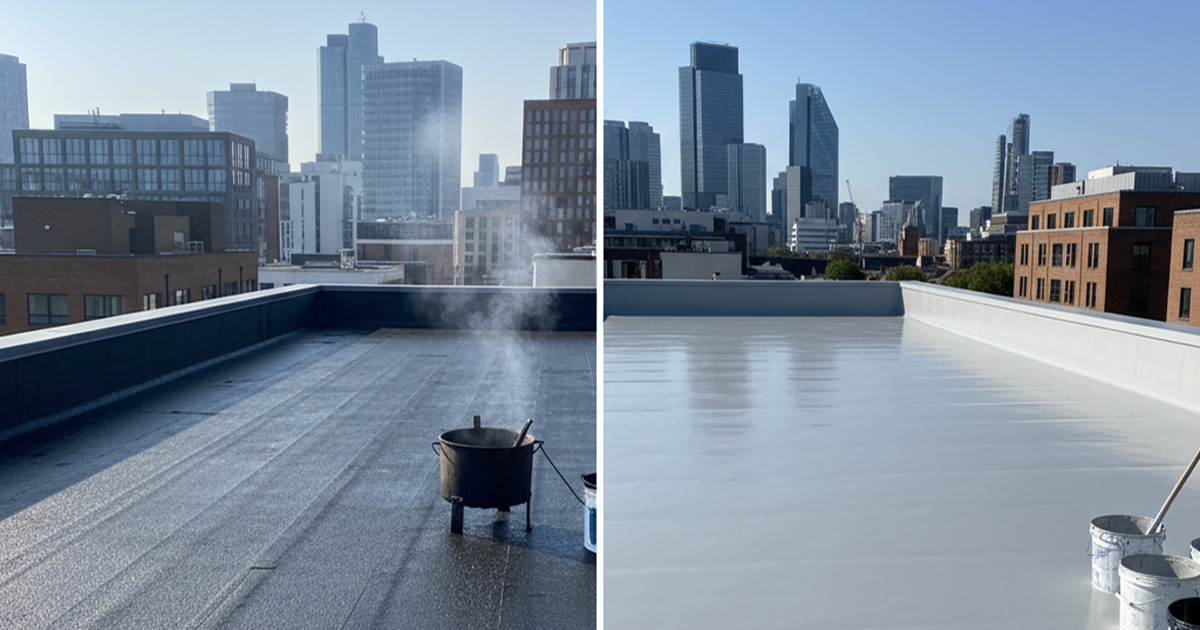
When it comes to protecting flat roofs in the UK, two main installation methods dominate the market – cold-applied liquid roofing and hot-applied systems such as torch-on felt or bitumen. Both have their merits, but they differ significantly in terms of safety, installation process, performance, and suitability for modern UK properties.
This guide explains the key differences between the two, helping property owners, contractors, and facility managers make an informed choice for their next flat roofing project.
Understanding the Two Systems
Hot-Applied Roofing
Hot-applied roofing systems (including traditional torch-on felt and hot bitumen), require heat or open flame during installation. Roofing felt or bituminous layers are heated with a gas torch, allowing them to adhere and form a waterproof seal.
This method has been widely used for decades in the UK and remains common in large commercial or industrial applications. However, it comes with safety risks and often requires dry, controlled conditions for proper installation.
Cold-Applied Roofing
Cold-applied roofing, on the other hand, uses liquid waterproofing systems that are applied at ambient temperatures – no flames, no heat. The liquid resin (usually polyurethane, PMMA, or acrylic-based) is rolled or brushed onto the roof, curing to form a seamless, elastomeric membrane that’s fully bonded to the substrate.
It’s a modern, flame-free alternative now favoured for roof refurbishments, overlays, and complex detailing.
Key Differences Between Cold and Hot-Applied Systems
| Feature | Cold-Applied Roofing | Hot-Applied Roofing |
|---|---|---|
| Installation Method | Applied as a liquid - no heat required | Involves heating materials with a torch or boiler |
| Safety | Flame-free and low-risk | Fire risk due to open flames |
| Weather Dependency | Can be applied in cooler, damp UK conditions | Requires dry, warm weather |
| Seam Integrity | Seamless membrane - no joints | Joints and laps can be weak points |
| Flexibility | Adapts to roof movement and temperature changes | More rigid and prone to cracking over time |
| Speed | Quick to install and cure | Slower due to heating and layering |
| Disruption | Low odour, minimal disruption | Noisy, odorous, and disruptive |
| Maintenance | Easy to repair and recoat | Repairs can be more invasive |
| Lifespan | 20–30 years (premium systems) | 15–25 years depending on materials |
| Environmental Impact | Low-VOC, sustainable formulations | Higher emissions and waste materials |
Advantages of Cold-Applied Roofing
- Flame-Free Safety: Cold-applied systems eliminate the need for torches, drastically reducing fire risk – a key advantage on occupied or sensitive buildings such as schools, hospitals, and offices.
- Seamless Waterproofing: The liquid membrane forms a continuous barrier with no laps or welds, preventing the most common source of leaks in flat roofs.
- All-Season Application: Designed for the British climate, cold-applied coatings can often be installed in cooler, slightly damp conditions – extending the roofing season.
- Low Disruption: With minimal odour and noise, projects can proceed with buildings remaining in use, ideal for commercial and residential properties alike.
- Durability and Flexibility: The elastomeric membrane expands and contracts with the roof, resisting cracks and maintaining watertightness for decades.
Advantages of Hot-Applied Roofing
Despite its drawbacks, hot-applied roofing still has uses in specific contexts:
- Thick, robust membranes ideal for heavy-duty commercial and industrial roofs.
- Proven performance over decades of use in the UK.
- Cost-effective for large, simple flat roof areas where access and safety are well controlled.
However, due to stricter safety regulations and insurance requirements, many contractors and local authorities now favour cold-applied alternatives.
Which System Is Better for UK Flat Roofs?
For most modern roofing projects in the UK, cold-applied liquid roofing is the superior choice. It aligns with current safety standards, reduces project risks, and offers longer-lasting, flexible protection suited to Britain’s wet, changeable weather.
Hot-applied systems still have their place in certain industrial environments, but for residential, commercial, and public buildings, flame-free cold-applied systems have become the industry standard.
Typical Use Cases
| Application | Recommended System |
|---|---|
| Roof refurbishments | Cold-applied |
| Complex details or penetrations | Cold-applied |
| Occupied buildings | Cold-applied |
| Large industrial roofs | Hot-applied or hybrid |
| Balconies, terraces, podiums | Cold-applied |
| Green or inverted roofs | Cold-applied |
Compliance and Safety in the UK
The UK Construction (Design and Management) Regulations (CDM 2015) place strict obligations on contractors to reduce on-site fire and health risks. As a result, flame-free systems like cold-applied liquid roofing are now often specified as standard in public sector tenders and insurance-backed projects.
Major UK manufacturers such as Sika, Triflex, and Kemper System continue to innovate with low-odour, VOC-compliant products tailored for urban environments and heritage buildings.
Conclusion
Both hot and cold-applied roofing systems can deliver effective waterproofing, but in today’s UK roofing landscape, cold-applied liquid systems stand out as the safer, cleaner, and more sustainable choice.
With their seamless application, superior flexibility, and compliance with modern safety standards, they offer a long-term solution ideal for flat roof refurbishments, commercial buildings, and residential properties alike.
Get in Touch
At Astral Roofing, we specialise in cold-applied liquid roofing systems designed for the UK climate. Whether you’re refurbishing a flat roof or planning a new build, our expert team can recommend and install the most effective waterproofing system for your property.
Request your free quote today and protect your roof with a flame-free, future-proof solution from trusted flat roofing specialists.
