
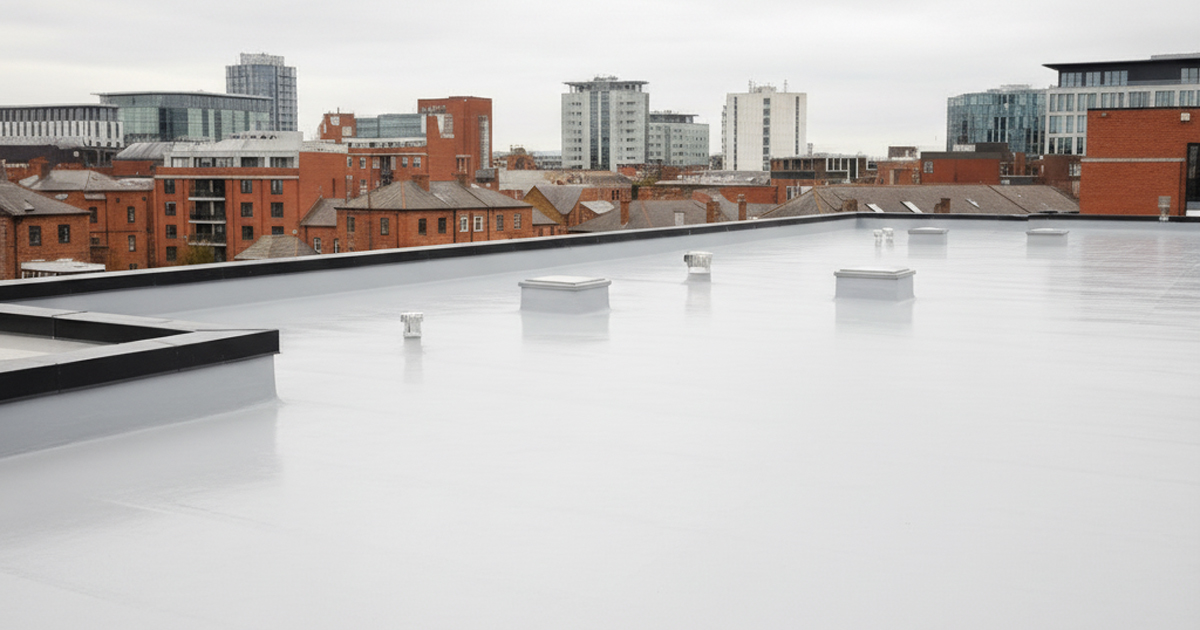
In recent years, cold-applied liquid roofing has become one of the most trusted and versatile flat roofing solutions across the UK. Designed to provide long-lasting, seamless waterproof protection, this system eliminates the risks associated with traditional hot works such as torch-on felt or bitumen.
For property owners, facility managers, and contractors alike, liquid roofing offers a modern alternative that combines durability, flexibility, and ease of application – all while meeting the UK’s stringent safety and environmental standards.
What Is Cold-Applied Liquid Roofing?
Cold-applied liquid roofing is a liquid resin system that is applied directly to the roof surface without the use of heat. Once cured, it forms a fully bonded, watertight membrane that moves with the roof and resists cracking, blistering, and water ingress.
These systems typically use advanced polyurethane (PU), polymethyl methacrylate (PMMA) or acrylic-based resins, depending on the project requirements. The result is a flame-free, flexible, and weather-resistant solution suitable for a wide range of roof types, from commercial buildings to residential properties.
How the Cold-Applied Roofing Process Works
- Inspection & Preparation: The existing roof surface is thoroughly inspected, cleaned, and primed. Damaged areas are repaired, ensuring a solid base for the liquid coating.
- Application of the Liquid System: The liquid resin is applied in layers using a roller or brush. In many systems, a reinforcing fabric is embedded between coats to enhance strength and flexibility.
- Curing & Sealing: As the coating cures, it creates a continuous, seamless waterproof membrane that fully bonds to the substrate.
- Final Inspection: The completed system is checked for uniform coverage, ensuring long-term performance and water resistance.
Benefits of Cold-Applied Liquid Roofing
- Flame-Free and Safe Installation: Since the system is applied cold, there’s no need for naked flames or hot bitumen, making it one of the safest roofing methods available. This is especially important in occupied or sensitive buildings, such as schools, hospitals, and offices.
- Seamless Waterproof Protection: Unlike traditional felt or single-ply systems with joints or overlaps, liquid roofing forms a monolithic membrane with no seams, removing the weak points where leaks typically occur.
- Excellent Adhesion and Compatibility: Cold-applied systems can bond directly to most roofing materials, including felt, concrete, asphalt, metal, timber, and single-ply membranes. This makes them ideal for refurbishment or overlay projects.
- Flexibility and Crack Bridging: The cured membrane remains elastic, accommodating structural movement and temperature changes without cracking or delaminating – essential for the UK’s variable climate.
- Low Odour and Minimal Disruption: Many modern systems are low-odour and solvent-free, allowing application with minimal disturbance to building occupants.
- Long Lifespan and Cost Efficiency: When properly installed and maintained, premium liquid systems can last 20-30 years, offering excellent long-term value.
Common Applications in the UK
Cold-applied liquid roofing is incredibly versatile and suitable for both new builds and refurbishment projects, including:
- Flat roof overlays and refurbishments
- Balconies, terraces, and walkways
- Plant rooms and podium decks
- Complex roof shapes and detailing
- Green and inverted roof systems
- Localised roof repairs
Why Cold-Applied Liquid Roofing is Popular in the UK
The UK’s unpredictable weather and growing focus on safety have accelerated the use of liquid-applied systems. Traditional torch-on felt requires dry weather and hot works, which can pose fire risks and delay projects. In contrast, cold-applied systems are safer, faster to install, and effective even in cooler temperatures, provided surfaces are dry.
Moreover, compliance with UK building regulations and health and safety standards increasingly favours flame-free roofing methods making liquid systems the go-to choice for public sector buildings, commercial properties, and modern developments.
Maintenance and Longevity
While cold-applied roofing is extremely durable, regular inspections and maintenance help preserve its lifespan. Astral Roofing recommends:
- Annual roof inspections to identify debris or damage early.
- Cleaning drainage outlets to prevent standing water.
- Checking detailing and edges for any signs of wear.
With proper care, your liquid-applied roof can perform reliably for two decades or more.
Choosing the Right System
Not all cold-applied systems are identical. Selecting the right one depends on:
- Roof substrate and condition
- Project timescale
- Environmental conditions
- Required lifespan and warranty
At Astral Roofing, we work with leading UK-approved systems to ensure every installation meets the highest standards for safety, durability, and performance.
Conclusion
Cold-applied liquid roofing represents the next generation of flat roof waterproofing combining safety, versatility, and long-term protection. Its seamless finish, flame-free application, and compatibility with almost any roof type make it a smart investment for UK property owners seeking reliability and compliance in one solution.
Get in Touch
If you’re considering cold-applied liquid roofing for your property or commercial building, Astral Roofing can help. Our expert roofers in Hertfordshire and across the South East specialise in liquid-applied waterproofing systems designed to deliver lasting results, safely and efficiently.
Request your free roofing quote today and discover how Astral Roofing can protect your property with modern, durable, and fully compliant roofing solutions.
