
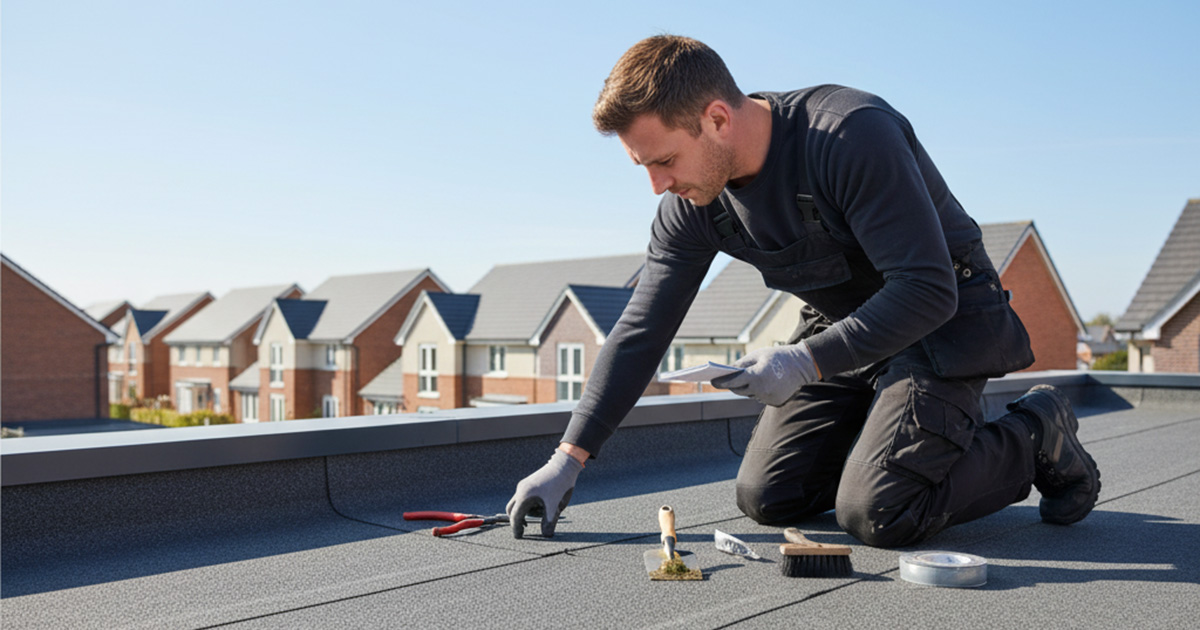
Flat roofs are a practical and cost-effective choice for many UK properties – from modern extensions and garages to commercial buildings. However, their design means they’re more exposed to the elements and require regular maintenance to stay watertight and perform well over time.
At Astral Roofing, we’ve helped countless homeowners and businesses across Hertfordshire and the surrounding areas extend the life of their flat roofs through proactive maintenance. In this guide, we’ve created a comprehensive flat roof maintenance checklist designed for UK weather conditions and roofing materials, including felt, GRP, and EPDM systems.
Why Flat Roof Maintenance Matters
Flat roofs are durable when properly cared for with lifespans of 20 to 40 years depending on the material. However, because they don’t shed water as quickly as pitched roofs, even small issues like blocked outlets or cracked felt can lead to leaks or structural damage.
Regular inspections and minor upkeep not only prevent costly repairs but also ensure your roof remains safe, energy-efficient, and compliant with UK building standards.
Flat Roof Maintenance Checklist
Use this practical checklist to keep your flat roof in top condition throughout the year:
Inspect the Roof Surface Regularly
- Look for cracks, blisters, or punctures in the felt, GRP, or EPDM surface.
- Check for lifting edges or seams – common signs of weather-related wear.
- Examine the surface for pooling water that doesn’t drain after rainfall.
- Note any discolouration or exposed underlay, which could signal UV damage.
Tip: Conduct a visual inspection at least twice a year – ideally in spring and autumn – and after any severe storms.
Clear Gutters and Outlets
Blocked drainage is one of the most common causes of leaks on flat roofs.
- Remove leaves, moss, and debris from gutters, downpipes, and outlets.
- Check that rainwater flows freely to prevent ponding or overflow.
- Fit leaf guards or mesh covers if your property is surrounded by trees.
Tip: Schedule gutter cleaning before and after winter, when debris build-up is highest.
Check for Ponding Water
Flat roofs should have a slight slope (fall) to allow water to drain away.
- After heavy rain, inspect for standing water that remains for more than 48 hours.
- Persistent ponding can lead to cracks, sagging timbers, or leaks.
- If ponding occurs frequently, a roofer may recommend re-levelling or installing tapered insulation to improve drainage.
Examine Flashings and Upstands
- Inspect flashing details around walls, vents, skylights, and chimneys.
- Look for cracked sealant, rust, or loose edges – all common sources of leaks.
- Ensure upstands (vertical junctions where the roof meets another surface) remain fully sealed and watertight.
Remove Moss, Algae, and Debris
Organic growth traps moisture, blocks outlets, and accelerates roof decay.
- Gently brush away moss or apply an anti-fungal treatment suitable for your roof type.
- Avoid using harsh chemicals or power washers, which may damage the surface.
- Keep overhanging branches trimmed to reduce future build-up.
Inspect Roof Edges and Trims
The perimeter is often the first area to show signs of ageing.
- Check drip edges, trims, and cappings for corrosion or movement.
- Ensure that all fixings are secure and sealed to prevent wind uplift or water ingress.
Inspect Interior Ceilings for Damp or Stains
Sometimes, the first sign of a roofing problem appears inside the property.
- Check ceilings and upper walls for dark spots, mould, or peeling paint.
- Early detection helps prevent structural damage and insulation failure.
Schedule Professional Roof Inspections
Even if your roof appears sound, an annual inspection by a qualified roofer ensures small issues are caught early.
- A professional can assess the membrane condition, drainage efficiency, and thermal performance.
- They can also provide a detailed maintenance report with recommendations for any remedial work.
Tip: Astral Roofing offers expert roof inspections and maintenance plans tailored to your building type and material.
Recommended Maintenance Frequency
| Task | Frequency | Notes |
|---|---|---|
| Roof surface inspection | Twice yearly | After winter and summer seasons |
| Gutter & outlet cleaning | Twice yearly | More often near trees |
| Professional roof survey | Once per year | Include photographic report |
| Debris & moss removal | As needed | Prevent water pooling |
| Sealant & flashing check | Annually | Especially after heavy storms |
Extending the Life of Your Flat Roof
Routine care can add 5–10 years to your roof’s lifespan. For added protection, consider:
- Applying a reflective coating to reduce UV and heat damage.
- Repairing small cracks immediately before water penetrates deeper layers.
- Re-coating or overlaying older felt roofs rather than full replacement.
- Keeping detailed maintenance records, useful for warranty and insurance purposes.
Final Thoughts
Flat roof maintenance doesn’t need to be complicated – consistency is key. A few hours of upkeep each year can save thousands in future repair costs and ensure your roof continues to protect your home or business for decades.
By following this checklist, property owners can manage small issues before they escalate, preserving the value and performance of their flat roofs year-round.
